

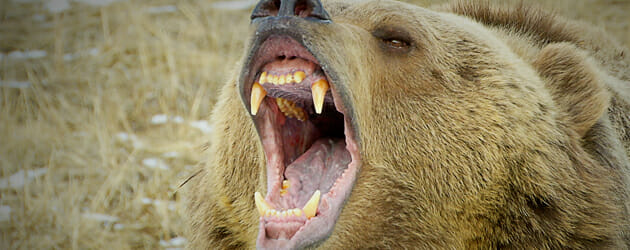
As a nature and wildlife cameraman, I want to share one of my best tips for shooting better nature and wildlife video.
But before I tell you what it is I want to tell you how this one single tip has worked for me.
It has allowed me to win several awards in film festivals, even international film festivals.
I have licensed footage using this one tip for programs on Animal Planet, Discovery Channel, National Geographic, as well as in AT&T commercials and theatrical films.
I was paid to go to Hawaii to teach HD cinematography.
Panasonic sent me to Africa to shoot footage with one of their new cameras.
I just found out yesterday that some of my footage will be featured in Panasonic’s presentation at NAB in Las Vegas. This is like the third time now that Panasonic has used my footage at NAB.
I mean think about how huge that is. One of the top video camera manufactures in the world says my footage showcases the best that their cameras are capable of. I’m still blown away by it.
This tip won’t cost you any money, I’m not selling it. In fact you have access to it right now. It all depends if you’re willing to pack it up and take it with you and use it out in the field.
So have you guessed what the number one tip for getting better nature and wildlife video is?
Well, when I tell you what the tip is, you’ll understand why I typed all the above and if you’ve read this far you’re probably capable of using this tip if you want to.
The number one tip for getting better nature and wildlife film or video is….
Patience.
Are you disappointed? Do you feel cheated? You shouldn’t feel either.
It doesn’t matter if you have the latest greatest camera gear, the money to travel to exotic locations. None of that matters in nature and wildlife filmmaking if you don’t have patience.
For the people who haven’t read this far and clicked away to their Facebook page, they’ll never make it. Sure they may get some good footage every now and then, but they’ll never consistently get footage that blows people away.
Yellowstone National Park is one of my favorite destinations in the United States for filming nature and wildlife. There is just so much diversity.
But the one thing I see time after time is people in a hurry to get a shot and move on to something else. If the geyser isn’t erupting or the grizzly bear is too far off in the woods, they don’t have time to wait to get a great shot. They can’t be bothered to wait until the light is a little bit better.
We live in a fast food, instant gratification society now. The wolves should be right by the road ready to be filmed, the geyser should be going off as soon as we set up our tripod. No one wants to take the time to get that great shot. Instead we’ve decided that mediocre is good enough and we’re fast to give excuses on why our video or photographs aren’t better.
Now granted, you can’t control nature so even with an abundance of patience, you still may walk away without a shot. However, your chances of getting a great shot increase dramatically if you’re willing to put the time into getting it.
If I told you the story behind a lot of my footage it would begin with “I waited until…”
So many times I was the only one there to witness something magical because I was willing to put in the time and wait to see if something would happen. Sure plenty of times I walked away without ever hitting the record button, but the times when I did made every time I’ve ever waited worth it.
You know geyser watching is a great test of patience. One of my favorite geysers is Great Fountain Geyser. It erupts every nine to fifteen hours. Yep, I said hours.
When you visit the geyser there is a prediction sheet there based on the last known eruption. But you still have about a six-hour or so window of time around the estimated time of the next eruption. So what to do? Do you move on and hope that maybe next time you’ll be closer to the eruption time and get a shot then? Or do you stick it out and wait? There are so many other geysers in the park that are more predictable and erupt more often.
Or, how about wildlife?
Wayne Gretzky once said “I skate to where the puck is going to be, not where it has been.” In wildlife filmmaking, that’s where patience comes into play. If I see a bear or elk or lion I often times go ahead and set up and allow the animal to come to me. So many people leap out of their vehicles and storm after an animal that they end up driving the animal away. By having patience and allowing the animal to come to me on its terms if it so chooses, not only do I get better behavioral footage but my encounter last much longer. The animal has been aware of my presence, doesn’t see me as a threat and continues on with whatever it is doing. But if I was in a hurry to get that shot I might still get something but nothing compared to the experience is I just wait and allow the animal to come to me instead.
So you say ok, all this is great but I’m not a patient person. How can I become more patient?
Well, like most skills, the answer is practice.
Here’s a few tips I’ve found scattered on the Internet…
Grow flowers
In a world of instant gratification, growing plants and flowers take time and patience to see results. I’m currently growing some cacti that I’ve grown from seed. They’re only about an inch tall after a couple of years but I look at them and think “I’ve grown these from a SEED”! My goal this year is to grow my own Indian Corn for Halloween. Sure I could go out and buy some but where’s the fun in that? Besides, it helps develop patience.
Delay Instant Gratification
If you see that new power tool or that new purse and just have to have it. Put off buying it for a day or two.
Don’t Cut Corners
Do all the steps needed to properly complete a task. It could be as simple as staying on the sidewalk and not cutting the corner by walking on the grass. Maybe instead of taking the shortcut while out driving you take the long way instead. Don’t know how many times I’ve discovered things to film by taking the drive in the country instead of taking the Interstate.
Set Aside Times to Practice Being Patient
One of the things I like to do to practice patience is to stand in the longest line at the checkout. How many times do you get into a short line only to be delayed by the cashier needing a price check for an item that can’t be scanned or the person who waits to get their checkbook out only after they’ve been given the total and then has to scrounge around for a pen? I know I get frustrated for sure. But by getting into the longest line and expecting to be delayed I’m sometimes surprised and rewarded by getting checked out while people in the shorter line are still waiting.
It’s much like nature and wildlife video and photography. Sometimes you just need to expect to be there a while and you get rewarded by having something extraordinary happen in a short amount of time. Whether you’re there for just a short time or waiting hours for something to happen. If you plan on being there for as long as it takes, you’ll never be disappointed.
So there you have it, my best tip on how you can film better nature and wildlife.
Let me know what you think in a comment below. It’ll help build your patience by taking the time to write down your thoughts about this tip.
And as always, shoot the ordinary and make it extraordinary!


What a great lesson on how to approach your daily affairs. Our society “rushes” us in so many ways. Why not take the time to enjoy the moment.
Thank Chad.
You know better than anyone since you work with so many rescue dogs with Last Hope that patience is the key to so many things. How many dogs would still be alive if people just had a little more patience to work with them?
I know working with Bella certainly has taught me more patience. But look how far she has come!
Such a great post! Patience is something I’ve been working my whole life to cultivate (I tend to rush towards everything–or, at least I did–I am learning). Your work simply inspires, my friend–as do your posts! =)
Thanks Liz!
Patience is something that needs to be worked on all the time. I think if you don’t practice it like anything then you tend to start losing it.
There are still things I really need to work on like following someone down the road in a 55 that is doing 40 and I can’t get by them. ( That happened last week and my patience was pretty thin by the time I could turn off.)
But I know in photography and video that if you can just wait for that one special moment you’ll be rewarded with something very special!
The best definition of patience that applies to photography and video is: “Patience is the ability to hang on when everyone else has given up.”
I’ve seen it so many times. People in a hurry and won’t take the time. The Great Fountain Geyser example is a classic. I would sit there for hours waiting. People would come and go and I’d still be there. Then the geyser would eventually erupt and afterwards I would think what a amazing act of nature all those people missed because they just couldn’t slow down.
I also think it’s more of an American thing as well.
On my way to Africa we stopped in Amsterdam for a few hours. There were no outlets to plug in my laptop. I asked a woman who was taking a poll on how to improve the airport experience and she told me that when Europeans go on vacation they disconnect and you won’t see them on their cell phones and laptops like you will here in the States. And she’s right.
When I was flying to Montana this past January I noticed that the moment the plane touched down all the cell phones came out. Emails were being checked, calls were being made, Facebook statuses were being updated.
So, I still have a long way to go to be patient with other people but in nature I think I can be more patient them most just because I love being out there so much.
Hi Kevin,
Great website and amazing work too!
For many years I have been in the UK and have studied nature for at least 30 years. I capture a lot of still images which get published and now I want to go to the next level and capture all the creatures I often meet on to video with the view to get the final edits commissioned by broadcast companies. There are so many camera models out there now and all manufacturer’s claim to be the best, Sony, Canon and so on.
I have looked at a few models but to be totally honest with you I am stuck between many models, C300, Sony PMW55 and others from Sony.
What would you say is a good wildlife camera able to provide the level of quality for television? More importantly it needs to be suitable for getting close to the action and operate in tough lighting conditions, owls in the dusk and low light in the wooded areas for example? I know you can pick up some good cameras and these may not have the best inbuilt recorders but easily they can adapt an external device such as the Samuri or similar to get that 4.2.2 or even 4.4.4 at 50Mbps (BBC and Discovery accepted format).
What I would really like is to be able to use up my L Series Canon lenses so something which can take those is ideal and saves a load on glass.
With your experience and knowledge I reckon you must have the almost (no camera is perfect for everything) perfect solution.
Any advice is appreciated.
Thank you and regards,
Mark.
Awesome advice Mark,
I have just begun my adventure into wildlife cinematography, spend 1 day/night on a mountain in camo, hardly moving, followed by a day on the coast and what I found was that I needed to work on being patient…great to have that affirmed also 🙂
Happy shooting
Hey Adam,
Thanks for the comment, I appreciate it.
Not only do you need to be patient waiting for something to happen in nature but it also works great in every day life from keeping you from stressing out about the little things.
Keep me posted how your filmmaking goes!
-Kevin
Patience.
You made a really great response above that in some areas you need more patience (like driving and not being able to pass) compared to waiting for the geyser to shoot in to air.
When I am out… I sometimes have great patience if I am doing something I enjoy, but very little patience for shopping malls or crowded loud places. I cannot get out fast enough.
So.. But if I needed to shoot in a mall, or a crowded loud place, I would just find a quiet place inside myself and tune everything else out to get to that shot.
Interesting to think about what motivates us to be patient!
Thanks for the post.
EJ
Elissa,
Thanks for taking the time to leave a comment, I really appreciate it!
I find that practicing patience helps me in all aspects of life. I know that when I get in the shortest line at the checkout something will go wrong and it will take twice as long as the longer line to get through. If I understand that this may happen beforehand, it’s not really a stressful situation.
I’ve had people apologize for holding up the line and I just smile and say no worries.
I know so many people that get frustrated when they don’t come back with footage of what they set out to film. There is so much beauty in nature that if you miss what you set out to film, find something else and make it worthwhile.
Life’s too short to be stressed out because you’re in a hurry!
on the road to Westcliffe, CO ran into a herd of Antelope (over 50) crossing the road but a few didn’t make across . I stopped and waited (patience) for 15 minutes then the rest of the head started across the road I was only 50′ from them worked pretty good till a State Trooper stopped to ask me if I need help and they left.
John,
Thanks for taking the time to leave a comment! I really appreciate it!
Vehicles make the best platforms to film. Wildlife see them all the time so usually don’t pay them that much attention.
I’m glad the trooper checked that you were ok but certainly not the best time to do so.
There’s a roller dam near my house that eagles congregate to once the river freezes up during the winter.
The only way you can get anywhere close to. Filming them is using your vehicle as a blind. Then it’s just a waiting game to see if any eagles decide to roost near you.
Thanks again for the comment! Feel free to comment or leave suggestions any time!
Hi Kevin,
I am looking for a good camcorder for wildlife. Probably 4K at 60fps and 1080p at 120fps.
Can you please suggest me one ?
Thanks
Hey Kirti,
Thanks for the comment! I appreciate you taking the time to leave it!
I’ve only just started playing around with 4k video so I’m not very well versed in what is out there. I’m not in the market to upgrade my current camera so I really haven’t looked at what is out there.
Maybe in a couple years I’ll take a look at upgrading to 4k but for now my current camera does everything I need from it.
If you find a camera that does what you want can you drop back here and let me know what you settled on?
Thanks!
Thanks Kevin for replying..
I did a bit research and found out Sony NEX-FS700R is a good one for slow motion, 240frames at full HD is beautiful.. Looking at other options too.
Looks like you’re on your way to finding the camera the fits your needs!
I usually don’t keep up on what is out there unless I’m looking for another camera.
Technology changes so fast that the camera I want to day may not be the camera I want six months from now.
Let me know what you settle on. Would love to see some footage when you do!
Hey Kevin,
Thanks for this post, everything you’ve said is resonating with me right now. I’m out in Yellowstone shooting a thesis documentary about the Grey Wolves and the people involved with them, so I definitely get what you mean when you said “The wolves should be right by the road ready to be filmed” haha. (Although we had a beautiful encounter where we were waiting at the parking lot at Lamar and had the camera out getting some establishing shots when one came literally running up the road right in from of us! And we got it!!!
I wanted to ask you a handful of specific technical questions:
I have a C300 at my disposal with the 30-105 PL mounted zoom, as well as a doubler to pop on. I love the quality of the C300 and am very familiar with the camera, but from where we’re at in the valley (since we’re also documenting the people watching, so we want to be as close to them as possible), and where the wolves normally roam, they’re just tiny specs. We also have a Canon 70D, and rented a Sigma 150-600, along with a doubler and a 1.4 magnifier. It gets us fantastically close from our distance, but I’m not familiar with the best practice with long telephoto cinematography. Do you ever use lenses at these lengths? (I think when I add up the lenses with both extenders on it we’re at about 1700 mm, then adding in the crop factor (which I know doesn’t mean the lens gets longer, but just the field of view) it’s at about 2700.
The images we’ve gotten on our first test with it weren’t so good (granted it was a bit later in the day and the heat waves were already a problem). I know shooting earlier in the morning will help, but I wanted to ask about other factors from an experienced cinematographer.
Would you think that if we rent a Full Frame camera that can use all of the lenses’ capabilities we can get a crisper image, even if we punch in a bit, or do you think that at these focal lengths it’s not going to matter?
Have you ever worked with using more than one multipliers on a camera? and if so, what would you recommend are some good practices/habits? Or would you never use more than one?
I also understand that in photography any little bit of camera shake on long lenses can really ruin an images quality, and so increasing shutter speed really helps. Would you think that we can change the shutter speed from the normal 1/48 to something much faster to get a crisper image, but still make the video seem to flow?
From shooting at these long distances, would you set the camera’s picture profile to a flatter LUT (we’re using the Technicolor Cine-style to try and get the best dynamic range out of the DSLR), or would shooting this way reduce the crispness that say a landscape profile might immediately provide?
I’m glad you’re a patient person because I’m sorry to bombard you with so many technical questions haha, and I completely understand if you can’t answer them. We just unfortunately have a limited time here due to budget and need to spend a lot of time with the people involved because the story is just as much about them as it is the wildlife, so if I make mistakes that I can avoid from asking someone experienced like yourself then all the patience can pay off.
And lastly, any tips for good places you know of to be able to see wolves from closer distances in Yellowstone, other than the Lamar Valley? We got our bear spray today so we’re ready to do some hiking!
Thank you for being the type of filmmaker who shares his experience and expertise, and takes the time to respond to people’s questions! It reminds me how much of a community the film world can be.
Billy
Hey Billy ,
First of all, thanks for taking the time to leave a comment! I really appreciate it!!
I really envy you being in Yellowstone right now. I don’t shoot much in the park anymore since the whole permit fiasco. Anything I shoot in the park now is for my own personal use so you’ll never see it online anywhere. It’s sad because I shot some beautiful imagery but not having a permit means I can’t use it for anything other than personal use. I post still from Yellowstone but never any footage anymore.
Were you there for the JB attempted takeover of the Lamar’s territory? Sounds like all the Lamar’s and their pups are accounted for.
A lot of Yellowstone is just luck in being at the right place at the right time. There are certain places you can go to find animals in the park on a little more consistent basis, for the most part however it’s just simple luck.
The C300 is a great camera. I’ve seen so much footage great footage from it.
When shooting at 600mm with a doubler you have three things working against you. Distance, vibration and the loss of sharpness in the lens. Of the three you really only have one that you can try to control, vibration.
With that much magnification it’s critical to have a second support for the camera and lens. Manfrotto used to make a long lens support arm that attached to the camera body and to the tripod. So you had two points of support, the lens attached to the tripod and the support arm attached to the camera and tripod. I’d even see about getting a light weight like a bog of rice or something to lay over the lens to weight it down and help dampen vibrations. With that much magnification and crop factor if you even look at it funny it’s going to jiggle.
There’s really not much you can do about distance. I shot a huge bull elephant in Africa with a big Canon video lens and a doubler. I think it was about 1.4 mile away maybe. You’re just shooting through so much atmosphere that you can’t get razor sharp footage no matter how much you steady the camera.
The other thing is just putting more glass between your subject and the cameras sensor. Even if the doubler is matched for that lens, anytime you pass light through more glass elements, you are bending the light and losing sharpness even if it’s oh so slight.
It was pretty easy to see that these cheetahs I was filming were much sharper without the doubler than when I tried to get head shots with the doubler.
Are you using a carbon fiber tripod? They’re supposed to dampen vibration more than an aluminum one. Plus their lighter. I have Miller tripod legs in both 75mm and 100mm and love them compared to say my Vinten aluminum tripod legs. I use a Vinten fluid head but also have a Cartoni but I need to get it in for repairs.
A full frame camera probably won’t make a real difference but it’ll probably look like it does just because the wolves wont be as big in the frame.
It’s like when you look at a photo on your phone and it looks sharp as hell but put it on a monitor and it’s not sharp at all. I think with that big a lens, the cropped sensor is just going to magnify the faults. The full frame isn’t going to get you as close but may give the impression of being sharper just because you’re not cropped in as much. Does that make sense at all?
I’ve never worked with stacked multipliers but I know people who have. Anything is possible it’s just comes down to what you’re willing to live with. If you go that route then stabilizing the camera with multiple points of support is even more critical. I’ve been out filming before where even walking by the tripod was enough to make the image jitter. It took me a few times to realize what was going on. Now sometimes I even walk away from the camera to avoid shifting my weight or taking a step which could create enough vibration to give me some camera shake.
Heck, I was playing around with my digital zoom at Artist Point in Yellowstone and I could get people standing on the Brink of the Falls filling about half the frame. It was so pixilated that all you could make out was that it was a human shape in say a red jacket but it was cool thinking I could film them from across the canyon.
For me, I’d rather have less than sharp footage than having jittery footage. Jittery footage drives me crazy. I don’t even hand hold anything because I hate jittery footage. Did I mention that I hate jittery footage? 🙂
Anytime you increase the shutter speed you lesson motion blur and the faster the more flicker you get. I’d try it on some non critical time and compare and see if you see any difference. I’m thinking probably not but you don’t know unless you test. Have someone run in the field a distance away and see what you think.
I lot of times I jack up the shutter speed for waterfalls to freeze individual drops to show the power of the water. But most of the time I leave it at default to get the softer look with the motion blur.
The best way to get closer to wolves is to get involved with a biologist who has the permits to get close. A lot of my wolf footage was shot in Minnesota.
The Lamar’s are probably your most visible pack right now. It’s really just luck if you can find wolves close.
A friend of mine filmed wolves that had an elk trapped in the river and came away with some incredible stuff. Night finally fell so he never did learn if the elk escaped or if the wolves made the kill. But he just happened to be driving down the road and spotted them. Shot it all right from his truck. Amazing stuff.
I guess the other thing you might think about is licensing a couple establishing shots from a stock footage agency and then your stuff from a distance almost plays out like when a football sportscaster gets on the screen and draws all the x’s and o’s to show how the play unfolded. If every shot didn’t have to be mine, that’s probably the way I’d go. A few establishing shots up close and then the distance stuff is like players on a chessboard.
Contrast gives the “appearance” of a sharper image. Shoot something flat then crush the blacks in post and it will look a lot sharper than the flat image. It’s not making the image any sharper it’s just giving the appearance of being sharper because there is more contrast between the light and dark pixels.
For the most part, I shoot in camera how I want my footage to look. So I hardly do any color correction in post. My current camera tends to shift a little towards green when I white balance and I haven’t taken the time to dial it out in camera yet. But other than that, I set the camera to get the look I want so I don’t have to worry about it in post.
With that said, I have started shooting a little with a flat LUT just to see if having that greater dynamic range makes my footage look better after color correcting than by shooting in camera with more contrast and color saturation. Haven’t done enough to see which way I will end up with. But a flat LUT certainly gives you more options and control over the way I currently do it.
So, long response but no real good answers for you. The idea thing of course is if you luck out and find the wolves closer to the road.
If your film gets online sometime, send me a link, I’d love to see it and put up a link here for others to see it as well!
Either way, let me know how the shooting in Yellowstone goes. It’s one of my favorite places to film. Wish I could share the footage!
Kevin, I read the article and couldn’t believe that it was from you. I remember you from underwater Overland, and I narrated one of your videos. You are spot on about patients. I also see too many people run by a scene, take a couple of quick shots and then run off again. I was in Venice Italy last week and saw the same thing, except everybody was using those damn selfie sticks. Last year I spent two weeks in the north Pantanal area of Brazil and spend three days waiting for the Jaguars when they came it was well worth the wait, because they had no fear of me sitting in that boat. In May of ’16 I will travel to south Africa to film there. I am using the Canon XF 300. I think it is a magnificent camcorder, and I have taken the time to learn all its bells and whistles. It has a fixed lens of about 572 mm. it forces you to get close to your subject or as you know wait for the subject to get to you. Once again, it was a pleasure reading your article take care be safe onit forces you to get close to your subject or as you know wait for the subject to get to you. People often ask what is the best camera out there. My response, the best camera you can ever have is the one you have in your hand when you see that once in a lifetime shot. Once again, it was a pleasure reading your article take care be safe, Bob Safay
Bob!
Great to hear from you! Glad to see you’re going to enter the next UWOL challenge next week. Cat is back as well. So it’s like a family reunion. 🙂
You will LOVE South Africa! I can’t wait to get back there!!
I’ve found the the more patient I am, the more likely something wonderful will develop. When you take your time, nature becomes at ease with your presence and things you probably wouldn’t see if you were in a hurry start to reveal themselves.
Can’t wait to see what you do with the UWOL theme!!
Thanks for stoping by and leaving such kind words! I really appreciate it!!